30 Years
Continuous cable manufacturing
Yaxing Cable is a self-owned manufacturing company running a 100,000 m² automated base with 10 production lines, an in-house German-system testing laboratory and full CE, UL, TÜV, SAA, RoHS and ISO 9001 certification. Every claim on this page is backed by real facility footage, third-party reports and a supply record you can check for yourself.
What follows is the base itself, the ten production lines, the laboratory and quality system, the certification set, the people, and four ways to check any of it for your supplier file.
Yaxing Cable is a direct manufacturer serving contractors, system integrators, OEM brands and distributors worldwide. Thirty years of continuous investment have gone into the plant, the production lines and the people who run them. Read the figures below the way a procurement or risk team would, because each one can be checked against documents we hand over and against a visit to the base.
Annual production capacity of RMB 3.6 billion is what makes a large project volume possible without passing any stage of it to an outside workshop. The same base and the same lines take a trial reel and a full container order, with a minimum that starts at 500 metres, so the cable you approve from a sample is made on the machinery that produced the sample, by the people who produced it.
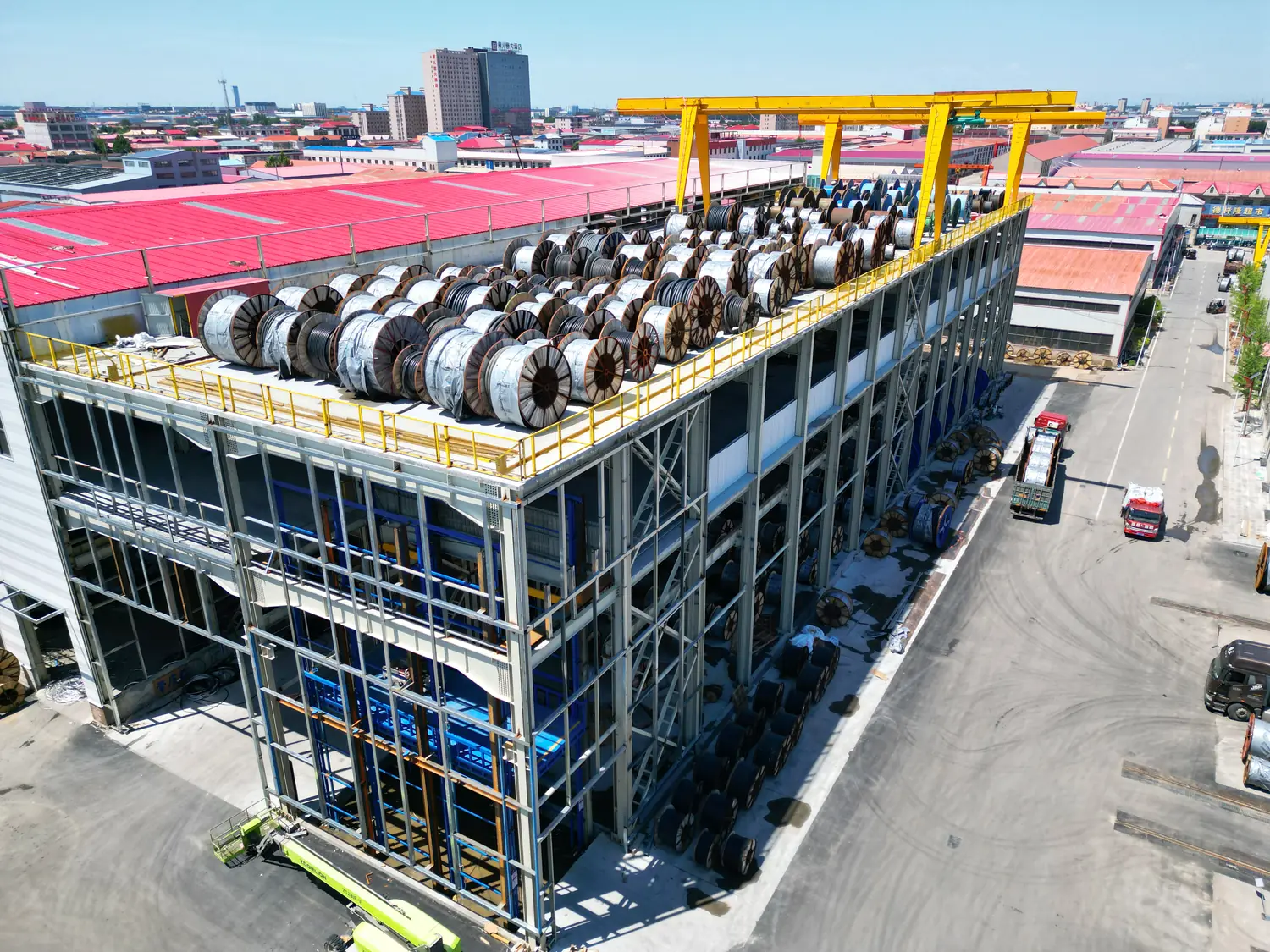 Finished-reel storage and gantry handling on site
The export record across 120+ countries and regions and 5,000+ customers rests on a routine our own staff run end to end: order documentation, export packing, shipping and customs paperwork move as one flow, which is how the certificate set and the test reports travel with the goods instead of being chased after arrival.
The hardest risk in cable sourcing is a trader presenting itself as the manufacturer. These are the checks an experienced buyer runs, and where Yaxing lands on each one.
Getting it wrong surfaces late: a delivery date set by a workshop you never approved, paperwork that does not match the goods at customs, and an untraceable failed batch.
| What you check | A real factory — Yaxing | A trading company |
|---|---|---|
| Production assets | Owns the plant, 10 lines and machinery | Relies on other people's workshops |
| Batch traceability | Every reel traced to its material lot | Cannot trace who actually made it |
| Certification | Certificates issued in its own name | Forwards other makers' certificates |
| Testing | In-house independent lab, 100% final test | No testing capability of its own |
| Factory audit | Welcomes on-site and live video audits | Avoids or stages the visit |
| Schedule and quality | Controls its own lead time and result | Depends on whoever it subcontracts |
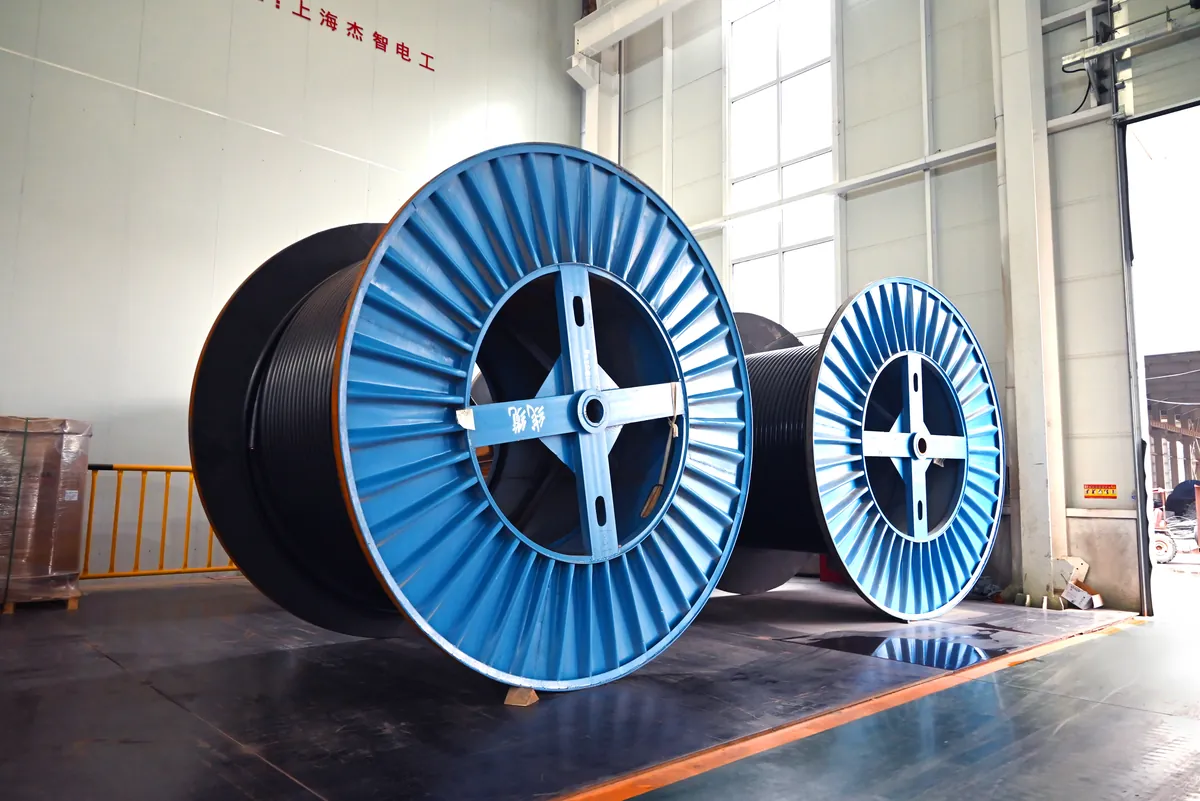 Finished drums waiting in our own loading area
The certificate holder, the business licence and the exporter on your invoice should all name one company. A middleman's file names a maker it does not control.
Request the test report for the exact construction and batch you are buying. A company with no laboratory can only forward whatever the real maker chose to give it.
Ask to see the line running your construction, camera moving from the extruder to the reel. A borrowed workshop cannot survive a walk it does not control.
On every row above, Yaxing sits on the factory side, and the rest of this page is the evidence for it.
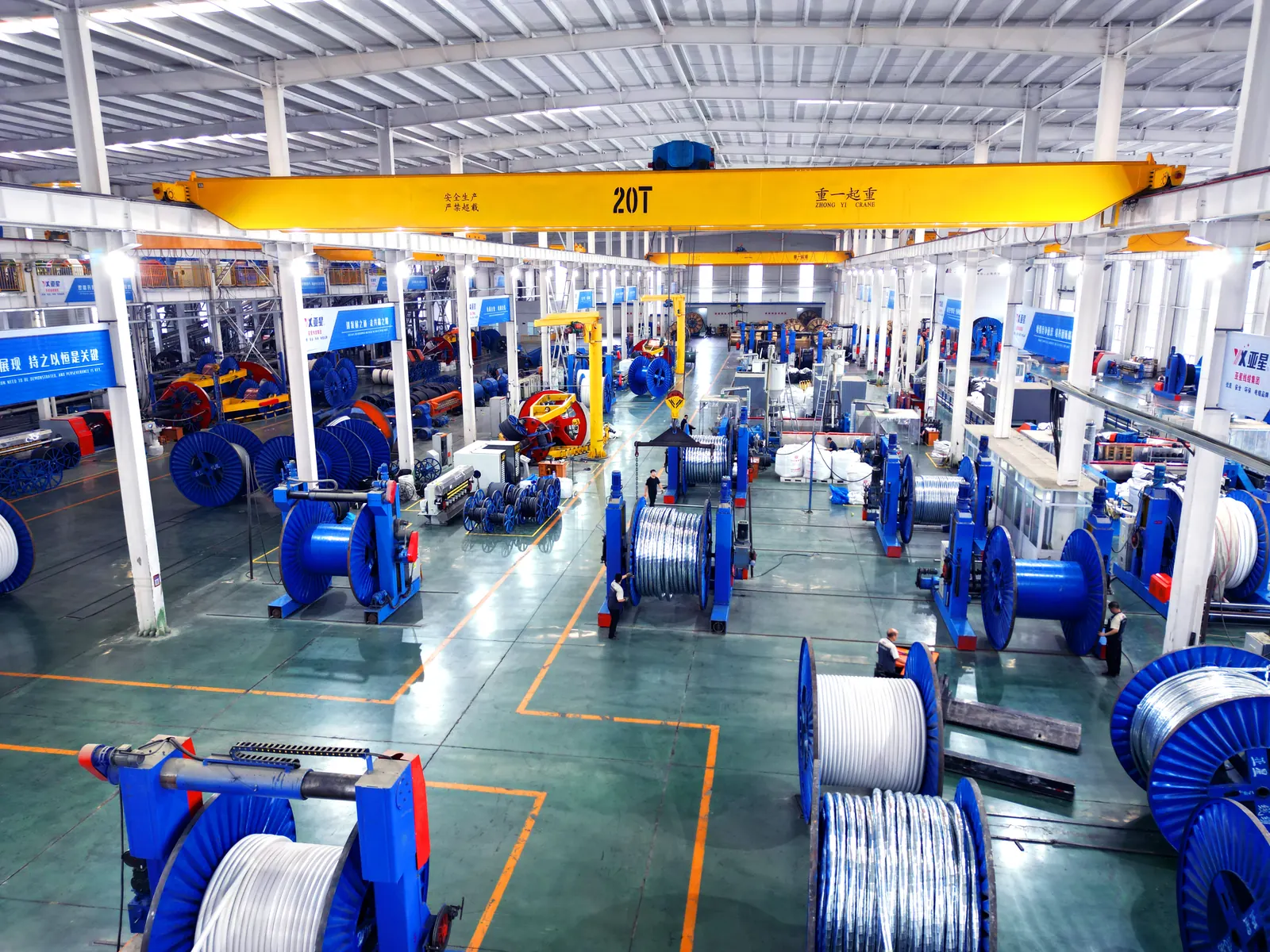 A 100,000 m² base you can walk end to end
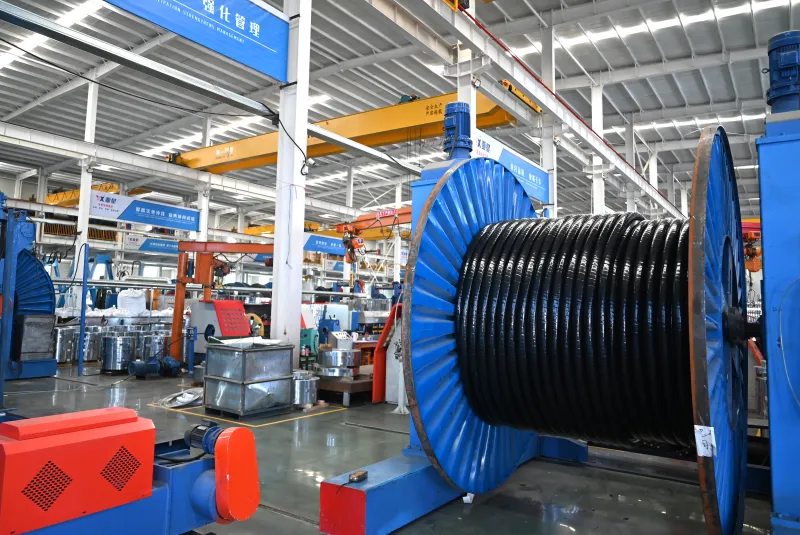 Inside one of the machine halls
This section is about the buildings rather than the process. Here is what fills the 100,000 m², and the order an audit normally walks it in.
A cable factory is defined by how many of these stages it actually runs. All five of ours run on our own ten automated lines, from bare metal to the packed reel.
The difference between self-production and subcontracting shows up in four places. Batch consistency, because the same operators hold the same settings and draw compound from one approved source. Traceability, because a single lot record follows the cable from conductor to finished reel. Schedule, because your delivery date does not sit in someone else's queue. And correction speed, because a deviation caught at final test is walked back to the stage that caused it the same day.
Buyers verify two things: a real lab they can send samples to, and a documented system that stands behind every batch. Yaxing has both.
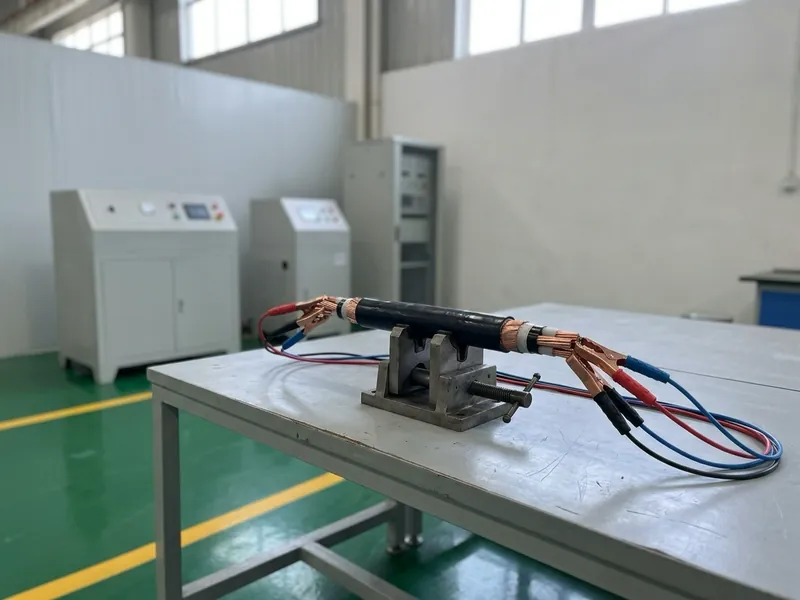 Illustrative view of a cable sample under test
A German-system independent testing laboratory sits inside the factory, equipped to run electrical and mechanical type tests. Independent means it does not answer to the production line whose output it is judging. It keeps its own records.
In practice you can ask for the full report on the construction you are sourcing, or have it re-tested by a laboratory of your own choosing. Both sides then hold a document to compare.
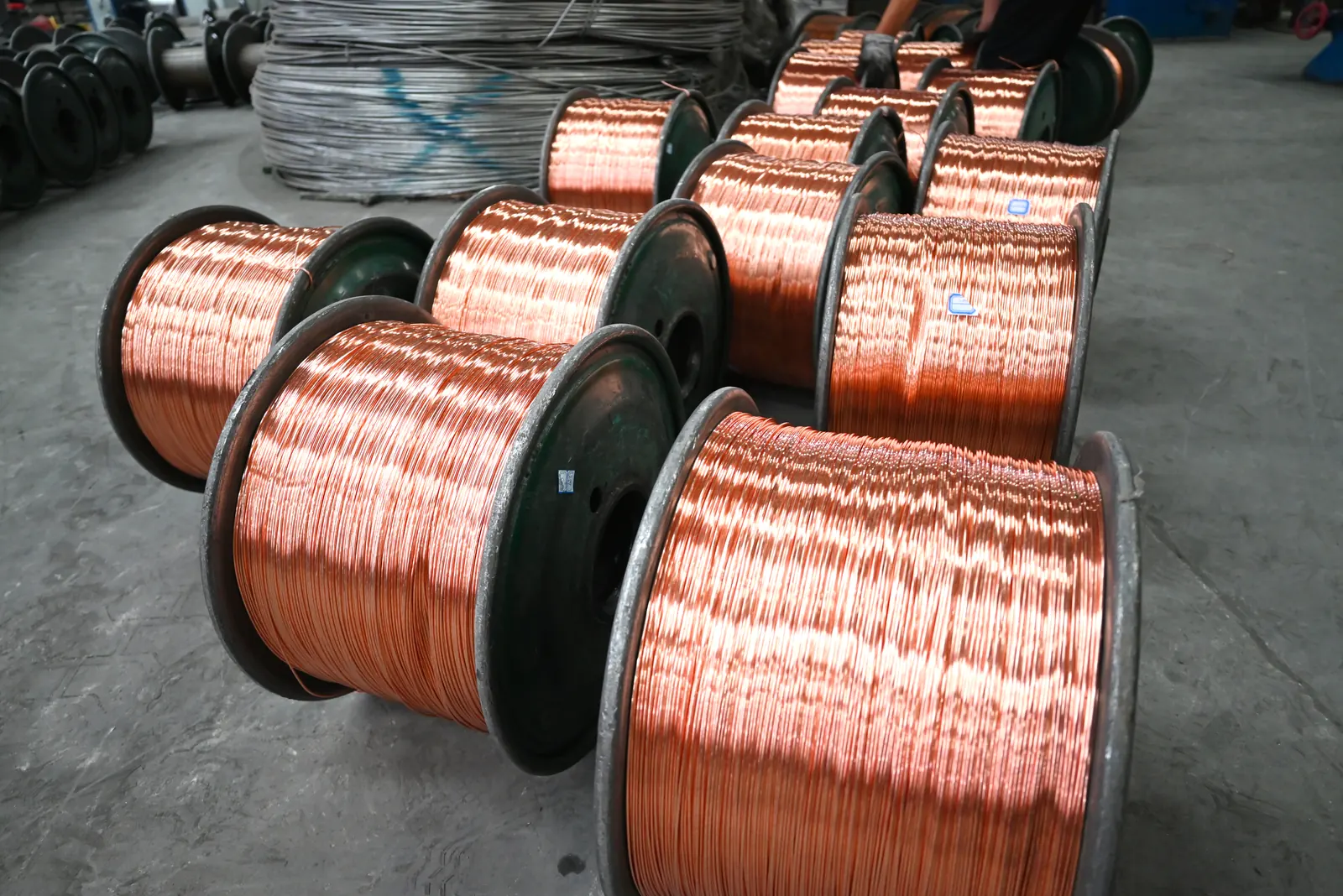 Drawn copper staged ahead of insulation
The factory is ISO 9001 certified, with documented procedures, high-quality raw material verified on intake, and batch records that trace every finished reel back to its material lot.
The system earns its keep in an ordinary week. Material arriving without matching paperwork is held instead of released to a line, and a batch record follows the cable through every stage, so a query raised months later is answered from the file.
One hundred per cent final testing works as a release rule: every reel has to pass before it moves to the loading bay, and a reel that fails stays put while the cause is traced. Because the laboratory shares the site, the test happens on the reel that was wound, so you can ask for the record by reel number.
Full international certification is what clears your markets and satisfies your compliance files, but only if the certificates belong to the maker. Ours are issued to Yaxing Cable, not borrowed.
A certificate is issued to a named manufacturer for a named production site. When the name on the certificate is not the name on your invoice, the compliance file carries a gap that surfaces at the worst moment, which is when an inspector or a customs officer asks who actually made the goods.
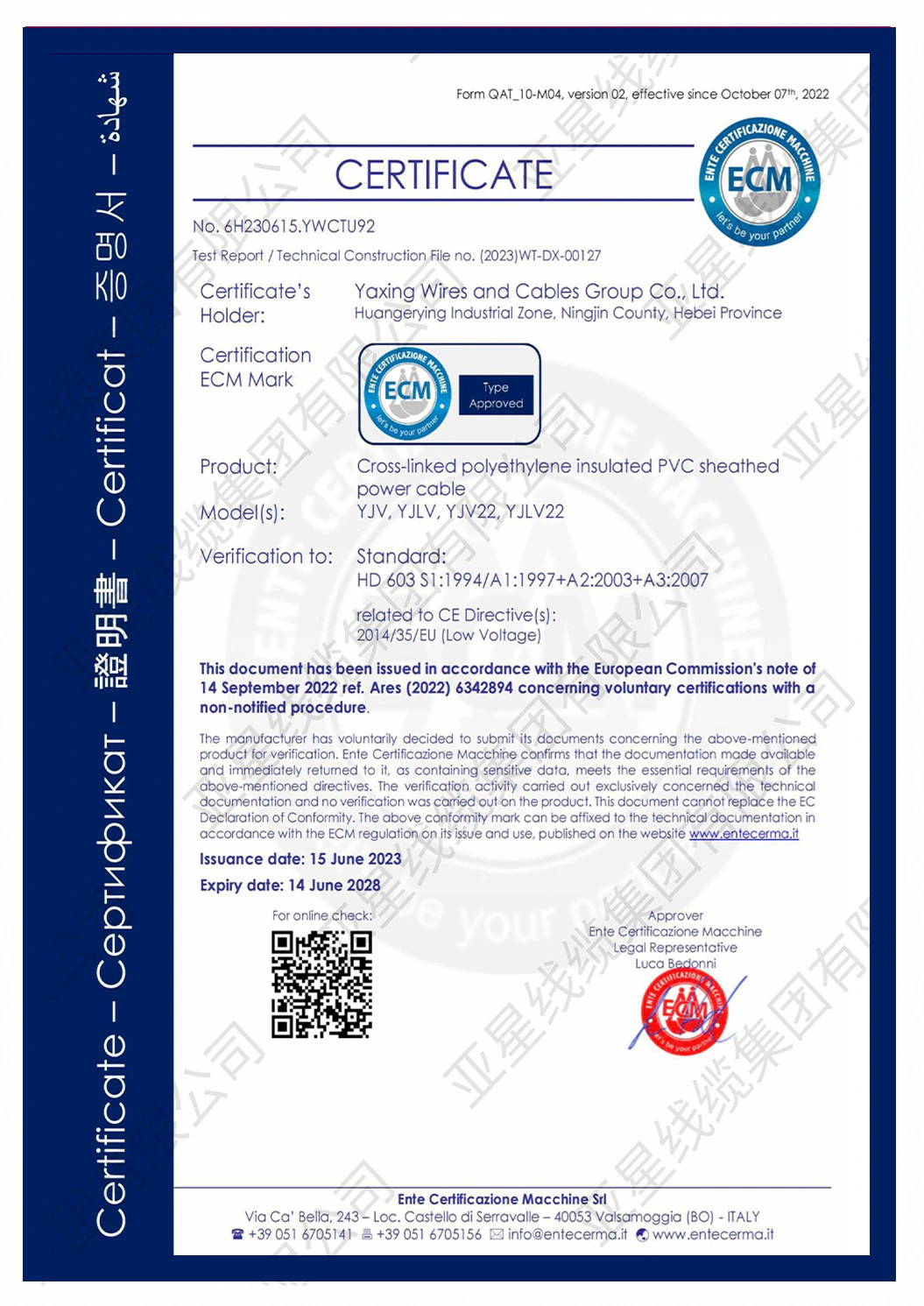 Ente Certificazione Macchine (ECM), Italy
CE Low Voltage Directive (2014/35/EU) verification, issued by ECM · No. 6H230615.YWCTU92
Covers XLPE insulated, PVC sheathed power cable — YJV, YJLV, YJV22, YJLV22
View the full certificate (new tab)
Ente Certificazione Macchine (ECM), Italy
CE Low Voltage Directive (2014/35/EU) verification, issued by ECM · No. 6H230615.YWCTU92
Covers XLPE insulated, PVC sheathed power cable — YJV, YJLV, YJV22, YJLV22
View the full certificate (new tab)
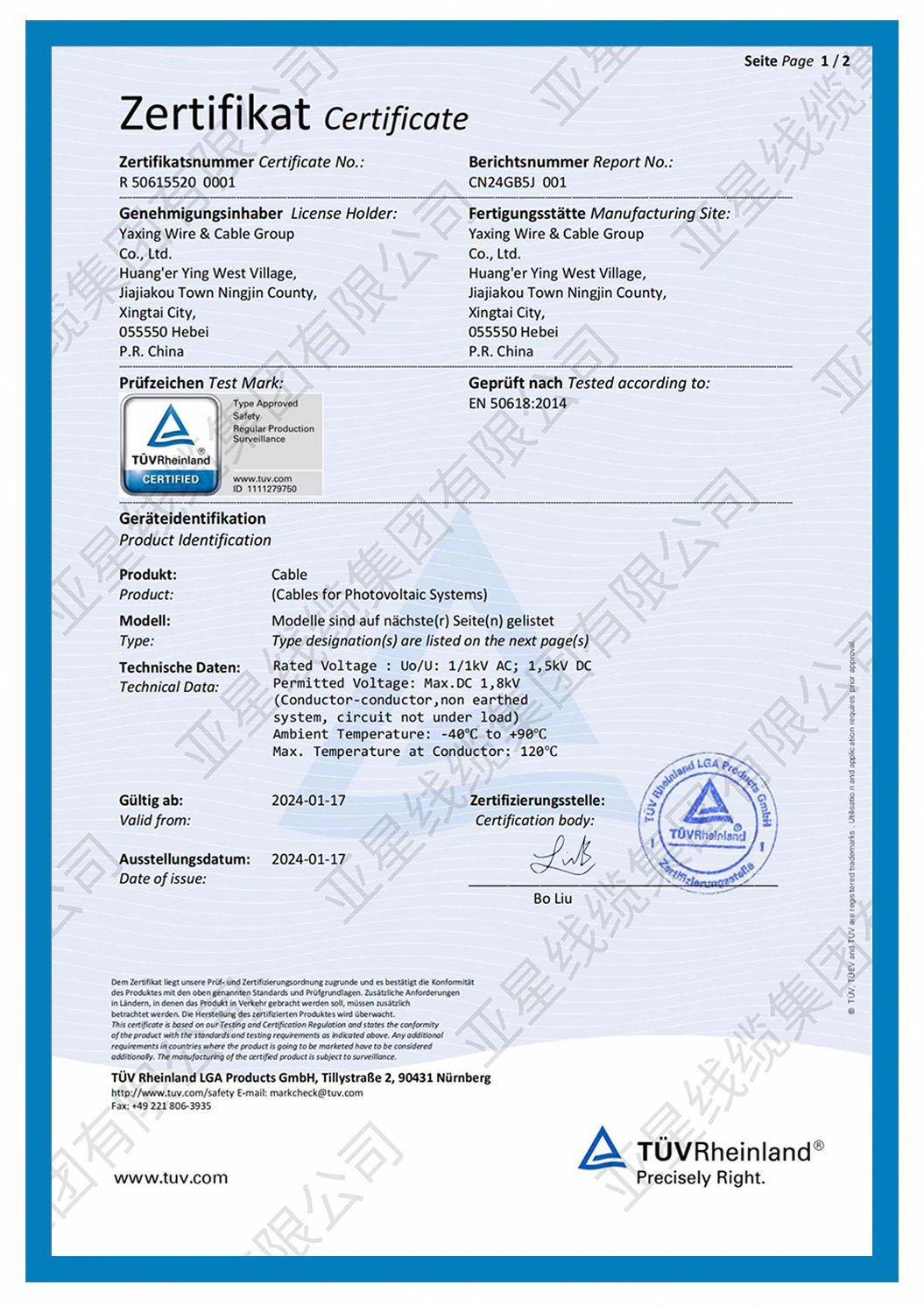 TÜV Rheinland LGA Products GmbH
Type-test certificate to EN 50618:2014 · No. R 50615520 0001
Covers cables for photovoltaic systems — 1/1 kV AC, 1.5 kV DC
View the full certificate (new tab)
TÜV Rheinland LGA Products GmbH
Type-test certificate to EN 50618:2014 · No. R 50615520 0001
Covers cables for photovoltaic systems — 1/1 kV AC, 1.5 kV DC
View the full certificate (new tab)
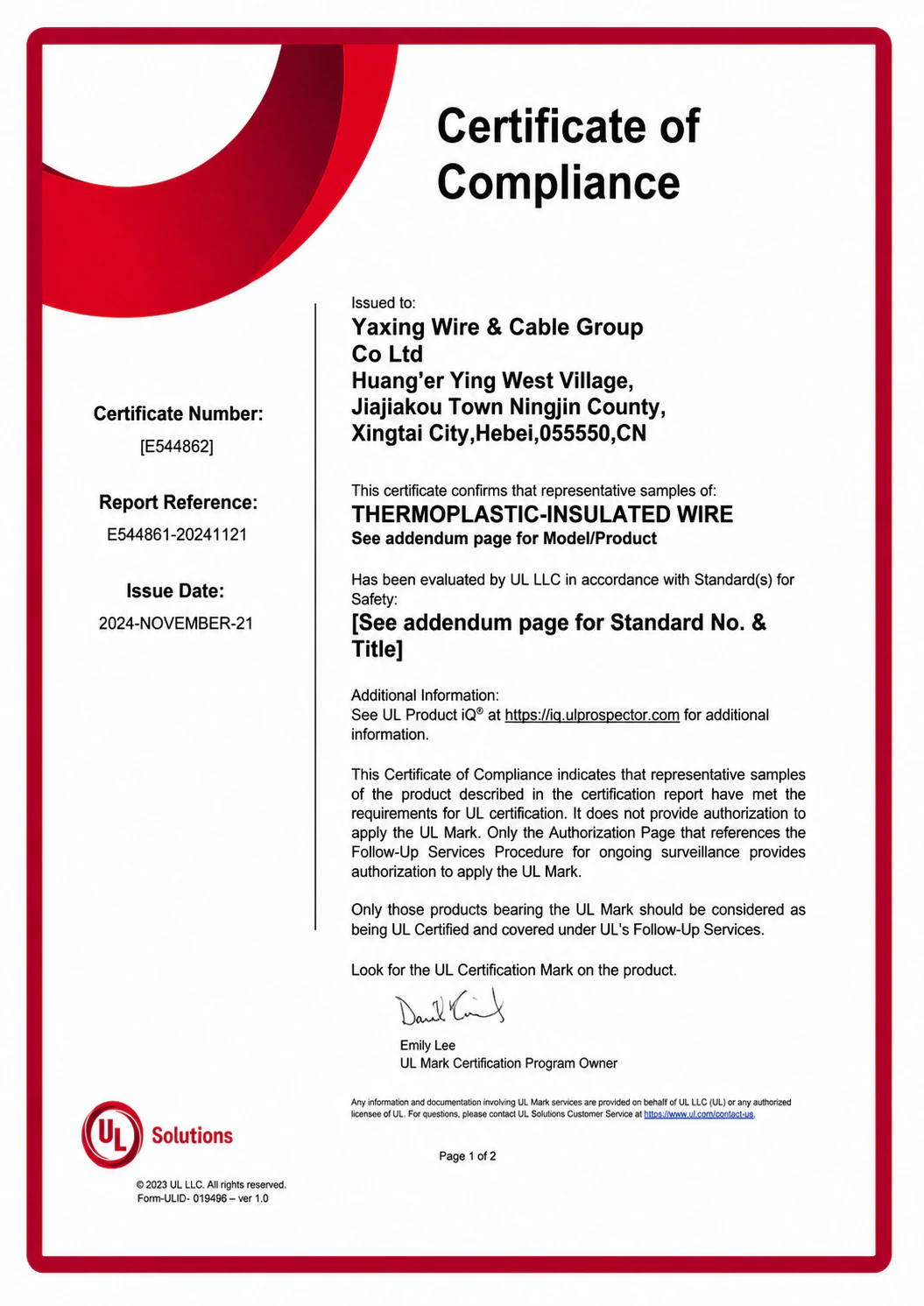 UL LLC
UL Certificate of Compliance · No. E544862
Covers thermoplastic-insulated wire
View the full certificate (new tab)
UL LLC
UL Certificate of Compliance · No. E544862
Covers thermoplastic-insulated wire
View the full certificate (new tab)
The declaration route for placing electrical product on the European market.
The North American certification file that specifiers and site inspectors ask for in the submittal.
Independent type-test verification carried out by a German certification body.
The approval route for electrical product entering the Australian market.
Restricted-substance compliance, the check that keeps a shipment out of a materials dispute.
Certifies the system that produces the cable, which is what makes a result repeatable across batches.
Plenty of suppliers claim a big-name customer. What matters for your due diligence is what it took to earn the status, and whether you can check it. To hold long-term supplier status with State Grid, one of the most demanding buyers in the industry, a maker must pass supplier qualification that includes product type testing, on-site factory audits, quality-system review and repeated batch inspection, then keep passing them to stay on the list.
That means a third party with far more leverage than a single order has already audited this factory, and re-audits it, on a standard you benefit from directly. It is also checkable: ask us for our qualification documentation and supply record for your background-check file.
What carries over to your own order is that none of this runs as a separate line. A qualified process is simply the process, so the intake checks, the batch records and the final test that satisfy a grid buyer are the same ones standing behind a container going to a distributor or a construction project. In effect you inherit an audit you never had to commission, and you can ask to see the evidence it was built on.
One limit worth stating plainly, because it is the kind of thing a background check will test: what we claim here is long-term supplier status and the qualification behind it. We do not publish project names, contract values or volumes, and you should treat any supplier that does so casually with more suspicion, not less.
A factory is machines plus the people who run them and answer for the result. Here are the people you actually work with.
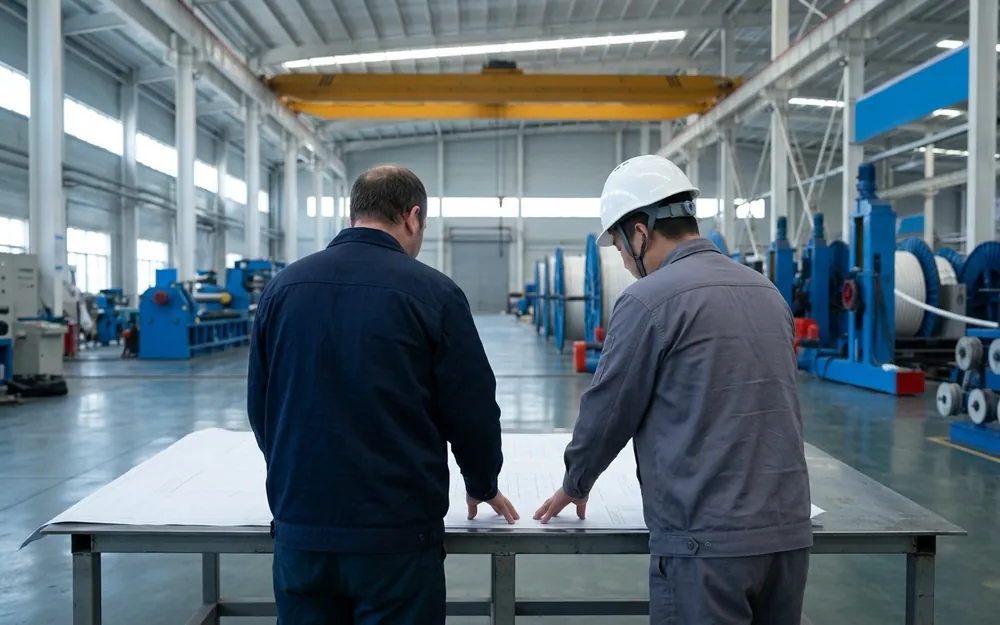 Illustrative view of a construction review
Qualifies constructions across IEC, UL, BS, AS/NZS and VDE, and develops custom builds to a drawing or to a target specification.
The part that matters to you happens before a quotation exists. Your drawing is read against the standard you named, the conductor class, insulation, screen and sheath are selected to meet it, and anything in the specification that will not survive the application gets raised at that point rather than discovered on site.
Where a specification arrives incomplete, engineering works backwards from the application: operating voltage, current, ambient temperature, installation method, and the mechanical duty the cable has to take in place.
Runs the ten lines and the laboratory that verifies every batch, from raw-material intake through to the final test.
The same team holds the batch record, so a question about a reel delivered last quarter reaches the people who actually made it.
Gives 7×24 support across time zones, with a named contact instead of a shared mailbox.
Order tracking runs from confirmation through production, shipping and clearance, so you are told where the goods are without asking twice.
One-stop service means the handovers happen inside one company. Your enquiry does not restart at each stage, because the drawing, the batch record and the shipping file all carry the same order reference from the first review to customs clearance.
Repeat business comes from how a factory runs when nobody is watching. These four points describe how we operate between orders, which is the part of a supplier relationship no certificate covers.
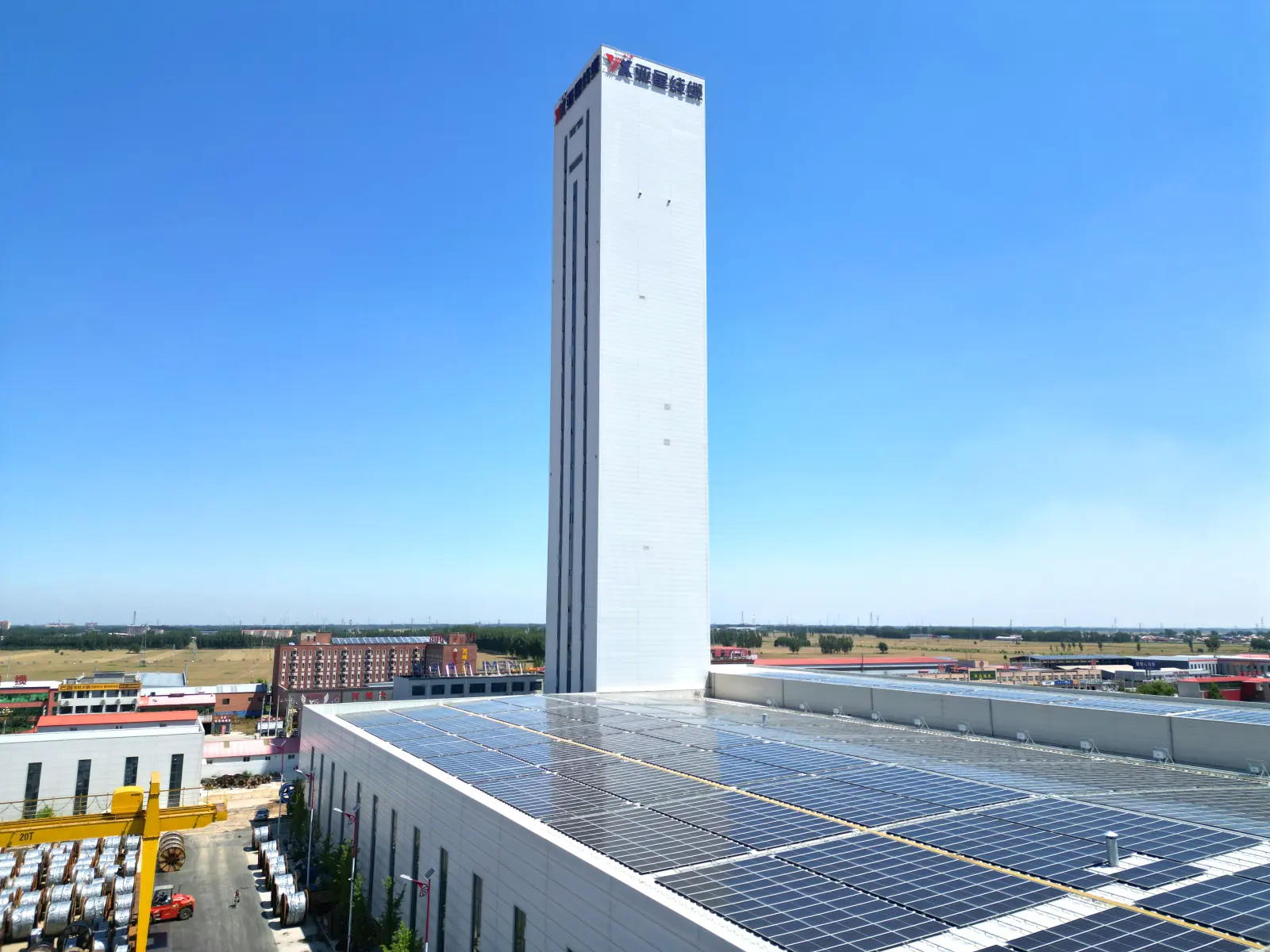
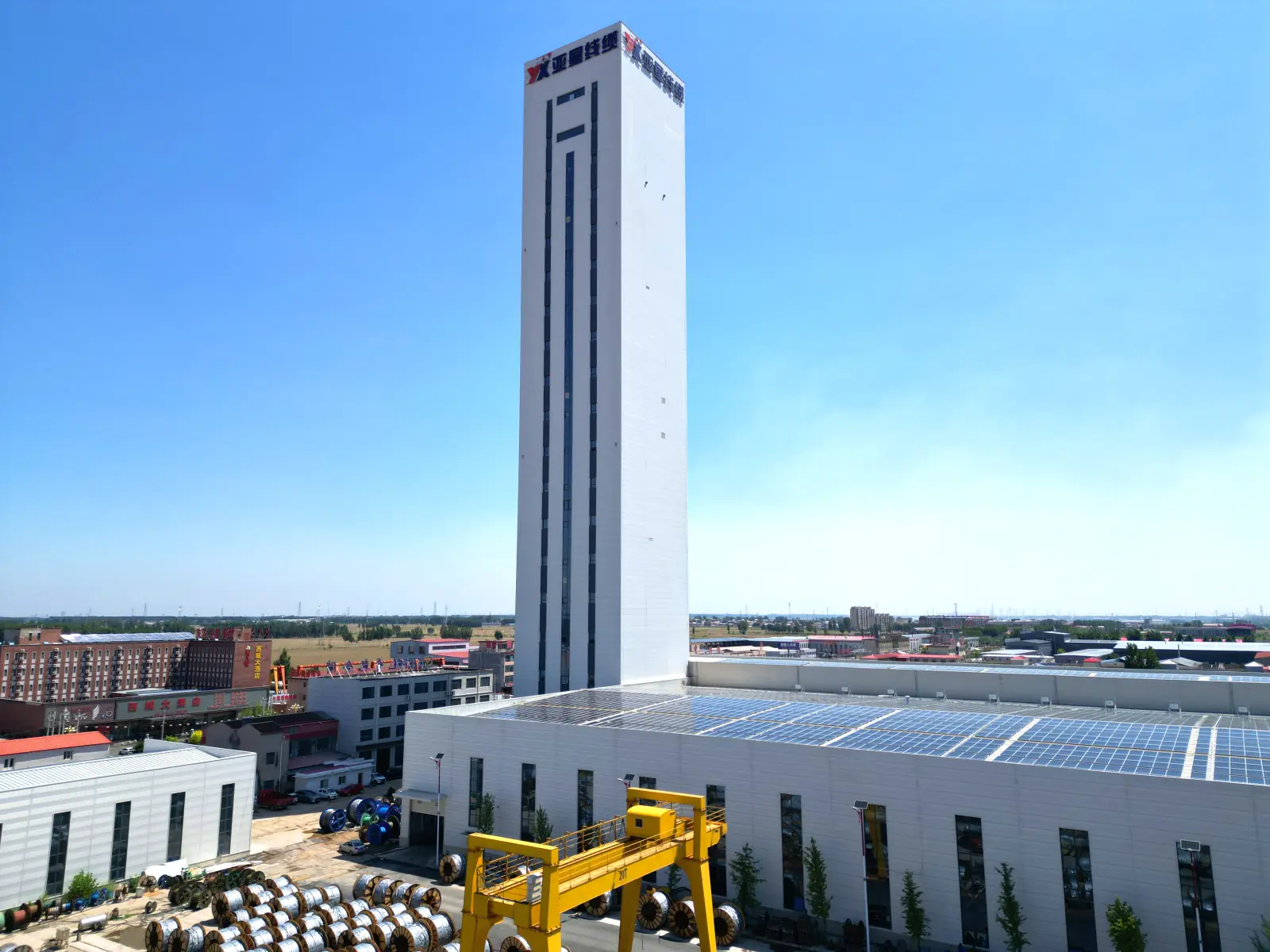 Solar-powered roofs across the base
Certificates and reports are real and issued in our name, and the claims on this site match the documents we will hand you.
Where we cannot support a figure, this page leaves it out. That is deliberate, and it is why a few sections here carry fewer statistics than a brochure would.
The base runs to defined safety practices on every line and in material handling.
Heavy drums, hot extrusion and crane movement are the three places where a shortcut costs somebody an injury, so those are the rules nobody on the floor is allowed to improvise around.
High-quality raw material selection and controlled extrusion reduce scrap and rework across long runs.
The solar roofs across these halls are visible from the yard on any site visit. Cutting rework is the other half of the same equation, because a batch that has to be remade doubles the material and the energy already spent on it.
Stable supply, honest lead times and a fixed point of contact for repeat business.
A 15 to 30 day lead time is quoted against the line your order will actually run on, so the date you are given is one we can hold rather than the earliest one that would sound good on a quotation.
Everything above is meant to be checked, not taken on trust. Pick any of these and our team will set it up. None of them require you to place an order first, and none of them need a week of notice.
The full corporate, capacity and certification document set for your supplier file. It arrives as one package a procurement team can attach to an approval request without reformatting it: company registration, the base and line capacity, the certificate set and the export record.
Request ProfileIndependent lab reports for the specific cable you are sourcing. Name the construction and the standard you are working to and we will send the report written against it. If you would rather a laboratory of your own choosing repeated the test, say so and we will supply the sample for it.
Request ReportsAn on-site visit to the base, arranged with our team. Visits follow the intake-to-loading-bay route and you decide what gets opened along the way. Bring your own checklist, because the useful audits are the ones where the host is not choosing the stops.
Book a VisitA real-time walk of the lines and the laboratory if you cannot travel. Live means unedited and on your clock, with the camera going where you point it, including the reel carrying your order number if one is already on a line.
Arrange a TourSend your specification or a verification request and reach the manufacturer without a middleman in between. A drawing, a datasheet or a photograph of the cable you are replacing is enough to start a technical conversation, so you do not need a finished specification before you write.
Your message goes to the sales team, who reply within four hours, with an engineer copied in whenever the enquiry involves a construction or a standard. Anything you asked for comes with that first reply instead of a second round of emails. If you have a reel number, an old datasheet or a tender document to hand, include it and the answer will be specific.